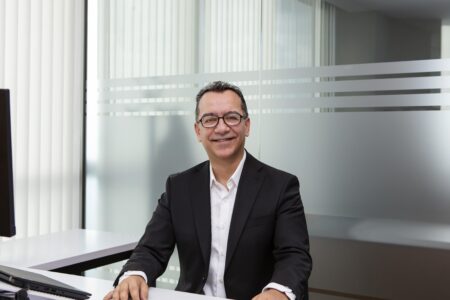
Dr. Martin Schneider
CEO
VDZ
In all countries, the production and use of clinker-efficient cements is key to decarbonising cement and concrete. In Germany, for example, cement manufacturers have significantly reduced the clinker content of their products in recent years. This is a notable achievement given that the average clinker content of their products has remained relatively stable for several years. However, the breakthrough in CEM II/C cements primarily led to the clinker factor being reduced to 66.7% in 2024. This is not only a historically low figure but also highlights the efforts of cement manufacturers to achieve climate-neutral manufacturing processes.
To bring these innovative, clinker-efficient products to the German market quickly, national technical approvals can be obtained. A record number of approvals has now been reached for new CO2 efficient cements.
In 2024, alternative fuels accounted for around 77% of the total fuel energy demand of the German cement industry.
Emission Reduction Through the Use of Alternative Fuels
Another approach to achieving climate targets is to use alternative fuels containing biomass as a substitute for most fossil energy sources. This significantly reduces CO2 emissions. In 2024, alternative fuels accounted for around 77% of the total fuel energy demand of the German cement industry.
However, even with every effort being made to reduce CO2 emissions, a proportion cannot be avoided with the current processes. To achieve the climate targets without jeopardising local industrial value creation, it is essential to capture these unavoidable CO2 quantities for subsequent storage and utilisation.
Carbon Capture Projects and CO2 Infrastructure on the Path to Climate-Neutral Cement Production
The European cement industry has made significant progress in this area. For instance, German and European cement manufacturers, along with VDZ, are collaborating closely with plant manufacturers and other partners within the European Cement Research Academy (ECRA) to develop methods for capturing CO2 from cement kiln flue gases, with the aim of either storing it geologically or mineralogically in the long term (carbon capture and storage, CCS), or utilising it for other purposes (carbon capture and utilisation, CCU).
As a result, by 2025, more than ten carbon capture projects had been initiated with the aim of achieving climate-neutral cement production in the coming years. In order to achieve this, a CO2 infrastructure is required to transport CO2 from the source to the sink. In 2024, VDZ published a study describing how such a pipeline infrastructure could connect CO2 sources from the cement, lime, and waste incineration industries.
The cement and concrete industries are probably undergoing its biggest transformation ever. The full value chain needs to be decarbonised step by step. Examining the various pathways, it is clear that further research and standardisation are needed to reduce the clinker factor, utilise alternative fuels, and capture CO2.
In this context, new SCMs will be examined in detail; they should be highly reactive in order to significantly improve the performance of clinker-efficient cements. VDZ and ECRA have long focused on grinding in this context. This applies not only to modern grinding circuits with high flexibility and low energy consumption it also includes ultrafine grinding and creating a dedicated, customised particle size distribution. Furthermore, the mechanochemical activation of SCM forms part of a broader research approach. While this technology was historically used to activate fly ash and slag, it can now be applied to clays or other potentially reactive materials.
CO2 Specifications and the Need for Standardization in Carbon Capture Processes
At the carbon capture end, VDZ is working on CO2 specifications and how these can be achieved in carbon capture plants. There are requirements from providers of capture technology that need to be met; in addition, the requirements of CO2 pipeline providers are currently very demanding. The open question remains: what are reasonable specifications that guarantee the safe and long-term operation of pipelines, while also ensuring the economic and feasible cleaning of gas streams, particularly the captured CO2? All research in this area must be adapted to the relevant standards as soon as possible. This is of high importance in order to allow for clear and unambiguous specifications.
Regarding standards, the new European cement standard EN 197-1 is scheduled for publication in 2027. It will be the first harmonised product standard in accordance with the requirements of the new Construction Products Regulation (CPR), setting a precedent for many other standards. While many new clinker-efficient cements are currently standardised at a national level, the harmonised approach will provide a consistent cement standard across Europe.
The greater market share of clinker-efficient cements is largely due to concrete standards. These standards are national for good reason: EU-wide harmonisation would not make sense due to the different building traditions and climatic conditions in EU member states. In Germany, the new concrete standard is DIN 1045-2:2023, and its introduction via the Technical Building Regulations (MVV TB) already defines new application rules for clinker-efficient cements, particularly affecting CEM II/M, CEM V and CEM VI cements. Ultimately, these rules facilitate market access in parallel with the path to national technical approvals.
Regarding standards, the new European cement standard EN 197-1 is scheduled for publication in 2027. It will be the first harmonised product standard in accordance with the requirements of the new Construction Products Regulation (CPR), setting a precedent for many other standards.
Supporting Knowledge and Competence Development through Scientific Research and Academic Collaboration
VDZ is dedicated to promoting science, technology, research and development in the fields of cement and concrete production and environmental protection. In this context, VDZ has always collaborated with universities and various research institutions. Areas of cooperation include concrete technology, construction materials, chemical engineering, mechanical engineering, chemistry and physics, to name but a few.
VDZ provides opportunities for bachelor’s and master’s theses, as well as PhDs. These academic degrees are achieved in cooperation with respective universities, and VDZ provides the environment for research which is typically strongly linked to a practical aspect of the cement or concrete value chain.
As the skills required to work in the cement industry are changing rapidly, VDZ has been actively involved in conducting a skills study at a European level and a similar study at a national German level. These studies provide comprehensive insights into the employment structure of the cement industry and examine which skills and training measures will be important in the future, in the context of decarbonisation, digitalisation, and demographic change.
These results are reflected in VDZ’s seminar programme which has been offering training and education for over 60 years. The portfolio includes various courses, including online and classroom-based options, which can be open to individual participants or customised for groups of representatives from companies such as cement manufacturers. The programme covers a broad scope of topics in the fields of process engineering, analytical methods and environmental protection, as well as new formats on innovative technologies and current industry developments. Further information can be found at: https://vdz.info/seminars