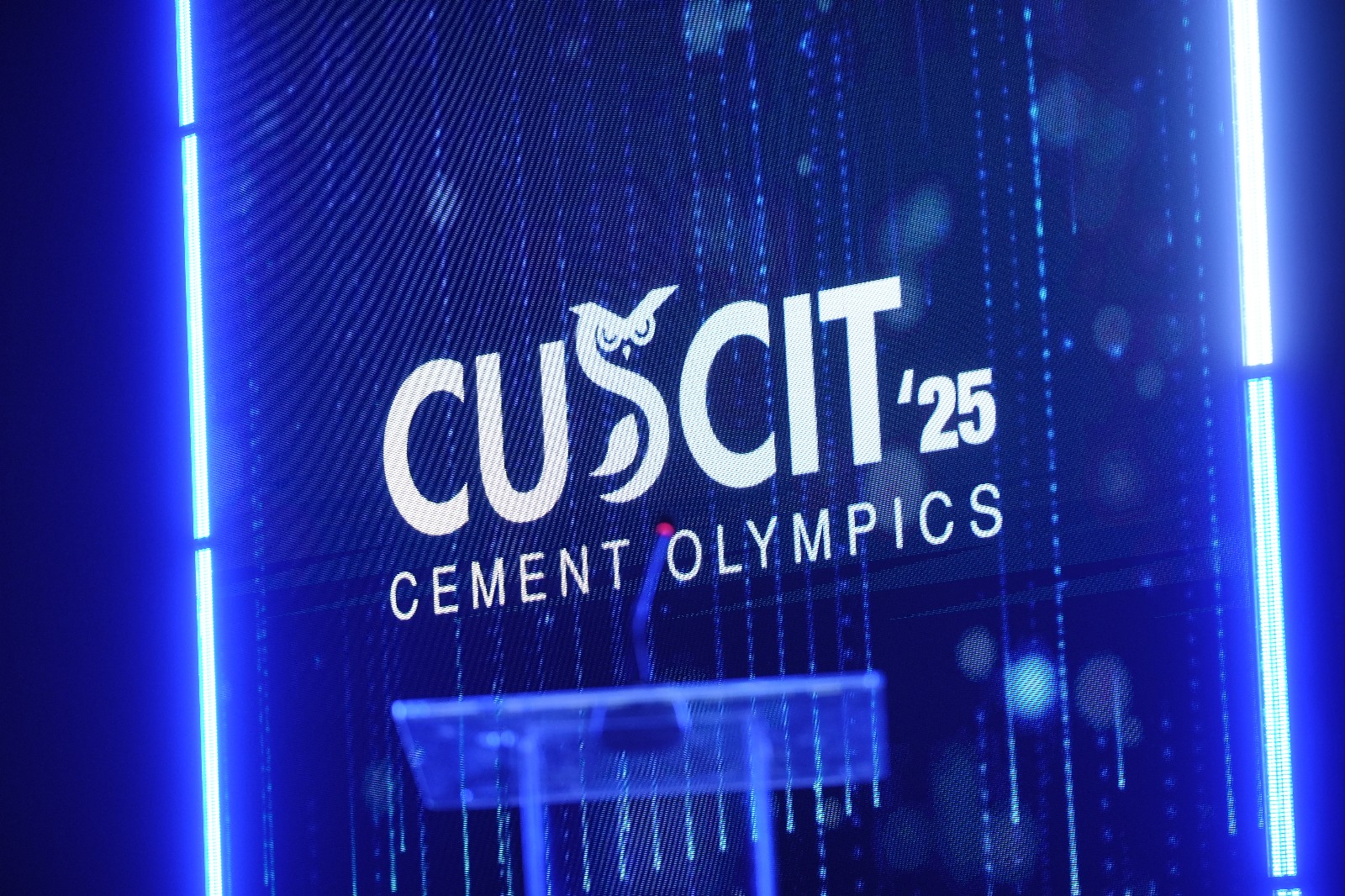
CUSCIT’25 Cement Olympics was successfully completed with the participation of delegates from five different continents. The event hosted attendees from a wide range of countries, including Türkiye, Germany, France, Australia, South Africa, Cameroon, Kazakhstan, Brazil, Czechia, the Netherlands, the United Kingdom, Cuba, India, Portugal, and Sweden. Approximately 45% of participants were suppliers, 36% were manufacturers, and the remaining 19% consisted of representatives from academia, media, public institutions, and organizations.
Organized through the official partnership of CIMPOR Global and in collaboration with EFCE, CUSCIT’25 Cement Olympics created a multistakeholder value network with the participation of the sector’s leading brands.
KHD Humboldt Wedag took part in the event as the Innovation Sponsor, while Labris Mining joined as the Opening Cocktail Sponsor.
Innomotics took part in the event as the Networking Cocktail Sponsor, while Ala Grup and FKK Mining were the Gold Sponsors of the event.
ECF Enginering became the Silver Sponsor of the event. Global Mining Consulting enhanced the scientific visibility of the program through its Academy Zone Sponsorship. Fizix took part in the event with its Digital Activity Zone Sponsorship, Argetest with its Coffee Break Sponsorship, and TÜV NORD with its Badge Sponsorship.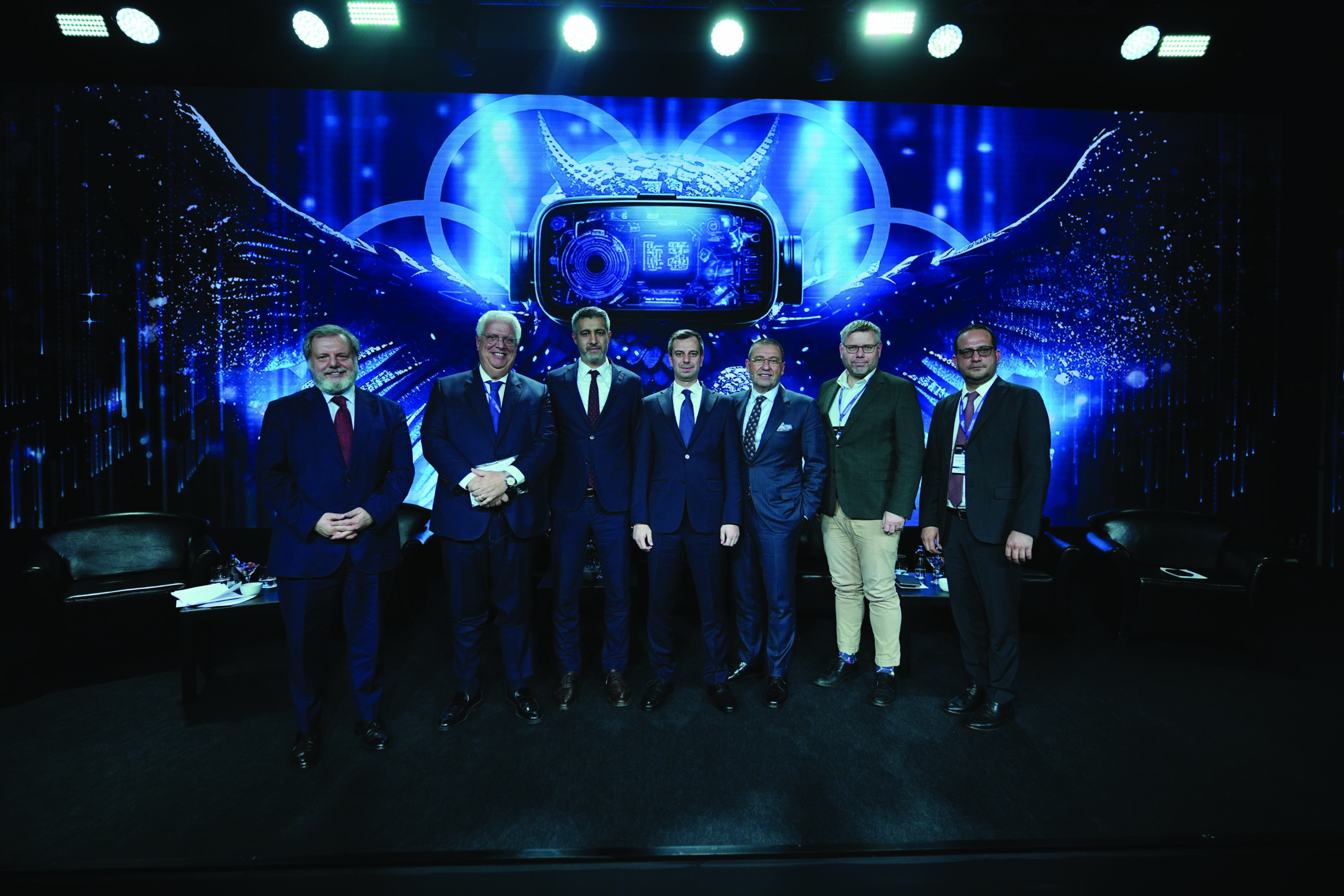
Opening Remarks and Roundtable Discussion Attracted Significant Attention
CUSCIT’25 Cement Olympics, held in official partnership with CIMPOR Global, began with the opening speech delivered by Nurhan Gürel, Chair of the CUSCIT’25 Cement Olympics Organization and Publisher of CemenTürk Magazine. In her remarks, Gürel shared the event’s unique structure, vision, and unifying spirit with the participants.
Prof. Boelo Schuur, EFCE Scientific Vice President, highlighted the scientific dimension of the event and emphasized the connection between academia and CUSCIT’25 Cement Olympics.
Emre Dabak, Deputy General Manager of National Technology at the Ministry of Industry and Technology of Türkiye, emphasized in his opening address that the event serves as a bridge between the public and private sectors.
Haluk Şahin Yazgı, Deputy Director General for Environmental Management at the Ministry of Environment, Urbanization and Climate Change of the Republic of Türkiye, underscored in his opening speechs that environmental sustainability is one of the fundamental dynamics shaping the future of the sector.
Halil İbrahim Kırşan, Chairman of the Mining Council at the Union of Chambers and Commodity Exchanges of Türkiye (TOBB) and CEO of Çiftay Holding, shared the business community’s vision and sustainable growth objectives, highlighting the importance of intersectoral collaboration.
Ali Emiroğlu, Vice President of the Domestic Mining Development Foundation, emphasized collaboration, environmental responsibility, and societal benefit in the process of sustainable transformation.
Following the opening speeches, the roundtable discussion titled “Innovations and Financing in the Cement Sector’s Net- Zero Journey”, moderated by Hakan Güldağ, Chairman of Ekonomi Gazetesi, addressed the industry’s net-zero targets, technological requirements, financing needs, and green transformation processes.
The roundtable discussion, featuring Suat Çalbıyık, Chairman of the Board at CIMPOR Global; Pedro Reis, Former Minister of Economy of Portugal; Emre Dabak Deputy General Manager of National Technology at the Ministry of Industry and Technology of Türkiye; İsmail Doğan, Board Member of TÜBİTAK; Mehmet Erdem Yaşar, Associate Director, Deputy Head of Türkiye, Corporate Sector at EBRD; and Prof. Boelo Schuur, Scientific Vice President of EFCE was broadcast live to the audience.
LC3 Day Türkiye on the CUSCIT’25 Cement Olympics Stage!
Suat Çalbıyık, Chairman of the Board at CIMPOR Global, shared the vision «Leaner, Faster, Stronger» in his opening speech at the LC3 Day Türkiye session. Çalbıyık also highlighted the importance of strategic approaches toward sustainable and efficient production processes in the cement industry.
At the LC3 Day Türkiye session, developers, technology providers, and implementers of LC3 technology came together to explore the future of low-carbon cement technologies from multiple perspectives.
The program opened with a presentation by Prof. Karen Scrivener, titled «The Importance of Integrated Approaches to Decarbonize the Construction Sector» delivered using hologram technology. The presentation drew significant attention not only for its content but also for the advanced technology employed. The hologram application concretely reflected CUSCIT’25 Cement Olympics’ digitalization vision, reinforcing the event’s technology-focused spirit.
Prof. Fernando Martirena, one of the developers of LC3 technology, shared key insights on the development process of LC3 and its industrial applications in different regions through his presentation titled «Update on Practical Experience During Industrial Dissemination of LC3»
Another key developer of the technology, Prof. Shashank Bishnoi, delivered a presentation titled «LC3 Production and Durability, and the Properties of Concrete Produced with LC3,» providing a comprehensive assessment of the performance parameters and durability characteristics of LC3 cements.
The session, centered on low-carbon production, innovative technologies, and a vision for sustainable development, was chaired by Hakan Arden. It continued with a presentation by CIMPOR Global CTO Berkan Fidan, titled «From Lab to Milestone: CIMPOR Global’s Calcined Clay Journey.» Fidan highlighted CIMPOR’s R&D investments, pilot applications, and commercialization strategies in the field of calcined clay, shedding light on the transformative potential of LC3 technology.
Dr. Thomas Schmitz, Director Business Development & Sales at thyssenkrupp Polysius, delivered a presentation titled «Calcined vs. MeCa® clay – Key Advantages of the Mechano-Chemical Clay Activation for Any Clay.» In his speech, he provided a comprehensive evaluation of traditional calcined clay processes compared to the mechanochemical activation approach, focusing on efficiency, flexibility, and energy requirements.
Jens Breidenbach, Head of Process Department at KHD Humboldt Wedag, delivered a presentation titled «KHD’s Highly Efficient and Flexible Clay Calcination Technology,» discussing the company’s high-efficiency calcination solutions.
The third session of LC3 Day Türkiye was chaired by Prof. Aubrey Mainza.
Luiz Felipe de Pinho, Managing Director of Dynamis, presented «ABCs of Carbon Reduction Road Map,» sharing the technical and operational foundations of carbon reduction strategies.
Following this, Estelle Raynaud, Cement Business Unit Technical Director at Saint-Gobain, delivered a presentation titled «Next Generation Speciality Construction Chemicals: Pioneering the Future of Low Carbon Cements» highlighting the decisive role of chemical admixture technologies in low-carbon production.
Mehmet Erdem Yaşar, Associate Director, Deputy Head of Türkiye, Corporate Sector at EBRD, delivered a presentation titled «Funding the Future: Financial Tools for Advancing Green Cement Solutions,» evaluating the advantages that next-generation financial mechanisms provide to the sector in financing sustainable investments.
Prof. Luis Marcelo Marques Tavares, faculty member at the Federal University of Rio de Janeiro, delivered a technical presentation titled «Improvement in Grinding of Cement and SCM Using Advanced Mathematical Models,» in which he examined the contributions of advanced modeling techniques to grinding efficiency within a scientific framework.
In the final session of the day, chaired by Prof. Dr. Serkan Çayırlı, Neslihan Ergüven, Director of Sustainability, Occupational Health & Safety, and Environment at Çimsa, delivered a presentation titled «Border Carbon Adjustment and Emissions Trading: The New Reality Shaped by Carbon Policies in the Cement Sector,» outlining the sectoral impacts of carbon regulations and Çimsa’s strategic adaptation in this area.
Following this, Prof. Boelo Schuur, Program Director at ISPT and Scientific Vice President of EFCE, delivered a presentation «ISPT: A Public, Private Partnership Organization in The Netherlands Stimulating Circular Carbon and Negative Emission Technology,» illustrating carbon management approaches in Europe and the role of public-private collaborations with practical examples.
Alper Yıldırım, Digitalization Solutions Business Development Manager at Innomotics, delivered a presentation titled «Smarter Processes through AI: Driving Digital Transformation in Cement,» highlighting the flexibility and efficiency opportunities that digitalization brings to production processes.
Kayıhan Oğuz, Founder of Labris Madencilik, delivered a presentation titled «Approach to Solutions from the Supplier’s Perspective in the Green and Digital Transformation Process of the Cement Industry,» assessing the strategic role of the supply chain in the transformation process.
The session at the Vision Zone concluded with a presentation by Fatih Altunel, Founder and CTO of FIZIX, titled «Making Cement Smarter: A Journey toward Sustainable and Reliable Production with Fizix.» Altunel showcased how AI and data-driven production technologies support sustainability in the cement industry through practical examples.
Academy Zone Became the Hub of Scientific Exchange
Throughout the event, academic short courses and technical presentations were held in the Academy Zone, running in parallel with the sessions in the Vision Zone.
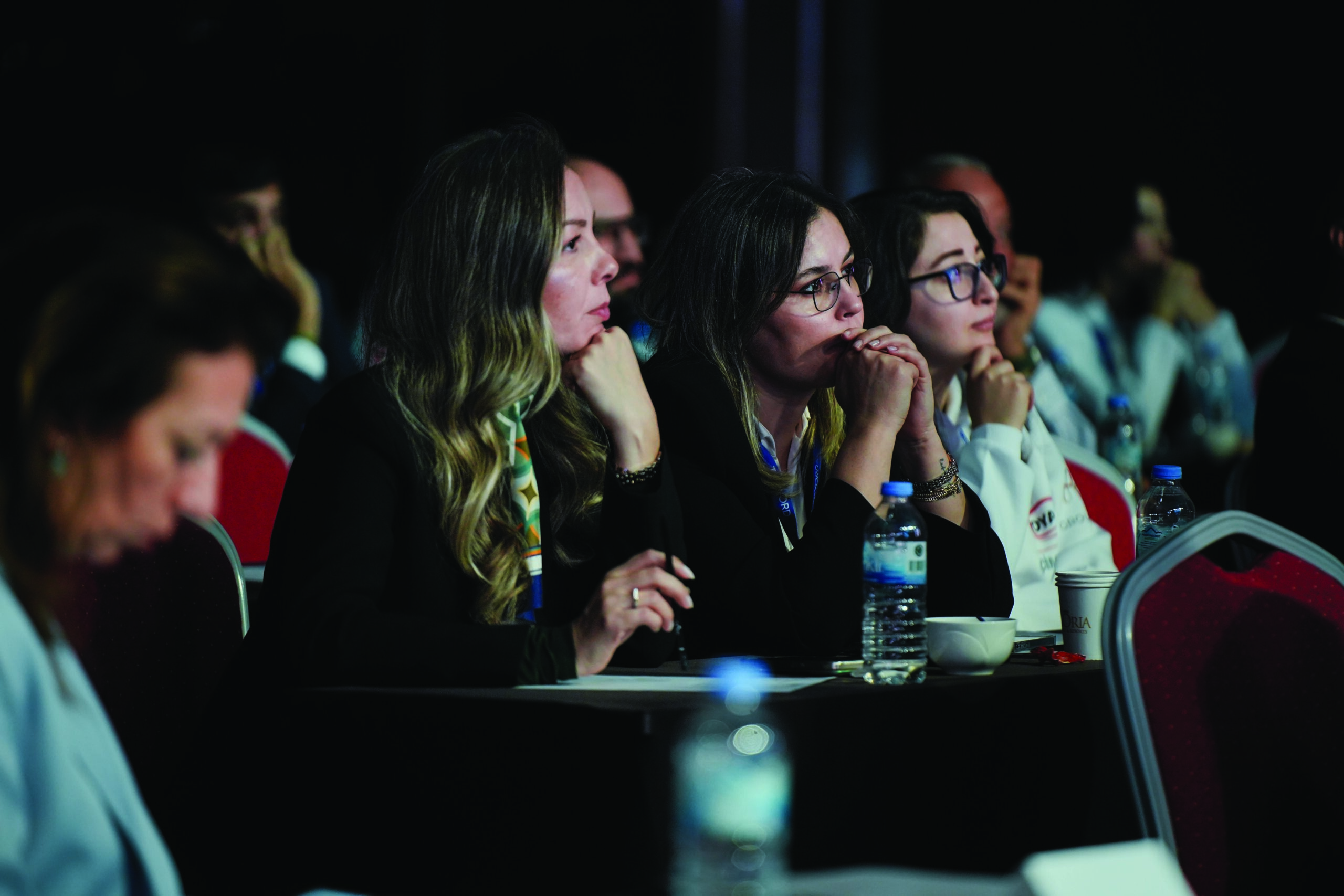 The event’s first short course was conducted by Elif Baknalı, Director of Industry, Trade, and Agribusiness at EBRD, and Nedim Mazilyah, Development Finance Specialist. Titled «Financial Management for Cement Executives,» this interactive training provided participants with practical insights on financial analysis, investment decision making, risk management, and sustainable finance strategies.
The first session in the Academy Zone was conducted under the leadership of Erdem Şen, Supply Chain Director at Votorantim.
The session began with a presentation by Prof. Dr. Hasan Yıldırım, faculty member at Istanbul Technical University, titled «Evaluation of New Cement Types in Terms of Durability.» Prof. Yıldırım discussed the long-term performance of different binder systems and their impact on durability.
Following this, Nurgül Doğan, MT Manager of the Industrial Business Unit at TÜV NORD Türkiye, delivered a presentation titled «Cement Industry Activities,» addressing quality management and auditing processes.
Dr. Thomas Schmitz, Director Business Development & Sales at thyssenkrupp Polysius GmbH, delivered a presentation titled «Decarbonization Technologies and Solutions,» sharing integrated technological approaches aimed at reducing carbon emissions.
Atakan Yetik, New Product Development Specialist at KYK Construction Chemicals, delivered a presentation titled «Hydrophobic Cement Development through Stirred Mill- Assisted Silane-Siloxane Modification,» presenting innovative material solutions based on cement surface modification.
Alperen Yıldırım, representative of Comex, delivered a presentation titled «Application and Performance of Classification Technologies.» sharing technical insights on the impact of particle classification technologies on process efficiency.
The second session of the day, chaired by Assoc. Prof. Dr. Ergin Gülcan, began with a presentation by Prof. Malcolm Powell, CTO of Geopyörä, titled «Geopyörä, an Effective Comminution Test for Geometallurgical Applications.» Prof. Powell outlined the fundamental principles of geometallurgical testing and the optimization benefits it provides for industrial grinding processes.
In the same session, Onurhan Bayraktar, Manager of Xylem Water Solutions and Services, delivered a presentation titled «Dewatering Solutions,» sharing his field experience on water management and environmental efficiency.
Later, Boaz Friedland, General Manager of EDS, presented «Multishaft Mill in Cement Grinding Circuits,» detailing the innovative structure, performance gains, and application areas of multishaft mill technology.
OPTECS Mining Operations and Commercial Manager Hugo Cohen delivered a presentation titled «Smart Control for a Sustainable Future: The Potential of AI in Decarbonizing Cement.» highlighting the transformative impact of artificial intelligence on process control.
At the end of the day, Ahmet Saraçoğlu, CEO of Kuartis, concluded the firstday program of the Academy Zone with his presentation titled «From Quarry to Cement Plant: The Future of Autonomous Haulage in Heavy Industry,» where he provided insights into the innovative perspectives brought by automation and autonomous transport technologies to the sector.
Second Day: Visionary Sessions Focused on Sustainability and Digitalization
The second day of the event started with the United Circles session chaired by Prof. Dr. Volkan Bozkurt. The opening remarks of the session—organized within the scope of the United Circles project supported by the European Union—were delivered by Assoc. Prof. Ergin Gülcan from Hacettepe University. During the session, speakers discussed strategies aimed at transforming waste into resources within the framework of the industrial urban symbiosis model proposed by the United Circles project, offering comprehensive insights into current developments in the sector and future-oriented perspectives for sustainable collaboration.

Dr. İrde Çetintürk Gürtepe Head of Air Management Department at the Ministry of Environment, Urbanization and Climate Change and Vice-chair of EMEP Steering Body at the United Nations Economic Commission for Europe Convention, delivered a presentation titled «Pollute-less Production is Possible,» in which she highlighted the environmental dimensions of sustainable production.
Following this, Aygen Erkal, Secretary General of the Turkish Construction Material Producers Association, delivered a presentation titled «Turkish Construction Materials Sector Overview,» sharing comprehensive insights on industry developments and economic trends.
Dr. Tülay Çağlayan Özlü, Director of Circular Economy and Digital Industrial Solutions at Ekodenge, presented «Empowering the Future of Digital Product Passports for Build Environment,» providing the industry with a forward looking vision.
In the panel section of the session, Emre Ergüçlü, General Manager of Baştaş Vicat Çözüm Enerji; Assoc. Prof. Dr. Ergin Gülcan Project Technical Coordinator at MINOVA Mineral Processing; and Buğçe Canlı, R&D Manager at TEPE Betopan, evaluated the future of the circular economy from a multidimensional perspective under the moderation of Dr. Tülay Çağlayan Özlü.
The session gained additional academic depth through the insights of Prof. Dr. Hasan Yıldırım from Istanbul Technical University.
Later in the day, during the session chaired by Prof. Luis Marcelo Marques Tavares, Prof. Malcolm Powell, CTO of Geopyöra, delivered a presentation titled «Ultimate Minimum Comminution Energy Limits, and How to Achieve Them,» sharing critical thresholds in energy efficiency and examples of innovative applications.
Prof. Aubrey Mainza, Dean of the University of Cape Town, delivered a presentation titled «How Comminution and Classification Processes can be Configured to Address Sustainability and Reduction of Carbon Footprint?» outlining methods aimed at minimizing environmental impact.
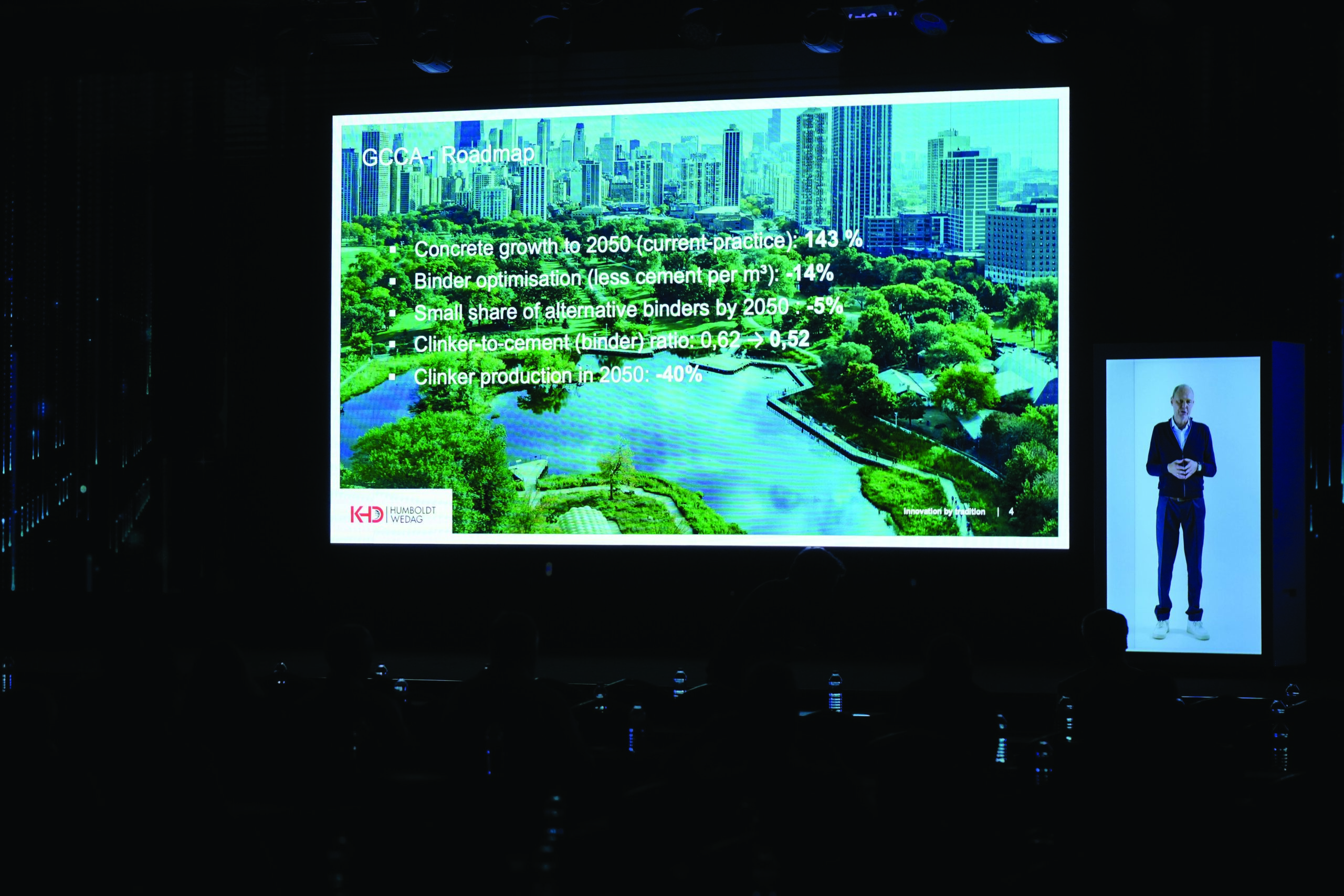
Matthias Mersmann, CTO of KHD Humboldt Wedag GmbH, delivered his presentation titled «Cement Beyond Carbon – The Future of Cement» using hologram technology, adding a distinctive dimension to the event.
The final session in the Vision Zone was chaired by Assoc. Prof. Dr. Serkan Gökçen. Dr. Hakan Arden, Technical Director of DMT Group, delivered a presentation titled «Geocementing: Impact of Geology and Mineralogy on Quarry Planning and Cement Production,» highlighting the strategic importance of geological data in production processes and the contribution of a scientific approach to operational efficiency.
Following this, Emrullah Emen Head of the Department of Digital Technologies at the Ministry of Industry and Technology of the Republic of Türkiye, delivered a presentation titled «Digital Transformation Program and Green Technologies,» sharing the steps for digital transformation in industry and policies for sustainable technologies.
Tuba Demir Doğan, European Union Expert at the Ministry of Industry and Technology of the Republic of Türkiye, delivered a presentation titled «Decarbonization Through Global Cooperation: Cement and Concrete Initiative & Climate Club Perspective,» evaluating international decarbonization initiatives and collaboration models from the perspective of public policy.
Second Day in the Academy Zone: Academic Depth and Industrial Innovation
The second short course of the event was also held on the same day in the Academy Zone. The course, titled «Modeling and Simulation Based Optimization of Comminution Circuits,» brought together leading academics in the field. The short course was conducted by Prof. Luis Marcelo Marques Tavares, Prof. Aubrey Mainza, and Prof. Malcolm Powell. Participants had the opportunity to closely examine the latest academic and industrial practices aimed at enhancing the efficiency of comminution circuits through simulation-based approaches.
Later on the second day, the sessions in the Academy Zone progressed productively and inspiringly under the chairmanship of Berrak Avcıoğlu, R&D Director at Çimsa.
Prof. Dr. Volkan Bozkurt, faculty member of the Department of Mining Engineering at Eskişehir Osmangazi University, delivered a presentation titled «Sustainable Transition in the Cement Industry,» shedding light on innovative transformation processes within the industry.
Ali Camgöz, Operational Technologies & Energy Manager at Çimsa, delivered a presentation titled «IoT Applications and AI-Driven Smart Energy Planning to Reduce Carbon Intensity in Operations,» highlighting the contributions of digitalization to energy efficiency.
Kevin Lunney, Operations Director at Mannok, delivered a presentation titled «Waste to Value: Opportunities & Challenges in Achieving RDF Solutions in Ireland,» evaluating waste management strategies from a circular economy perspective.
Vahit Ersin İmren, R&D Executive at Çimsa, delivered a presentation titled «Material Innovation for Sustainable Building Solutions,» introducing innovative R&D initiatives that will shape the building materials of the future.
In the final session of the Academy Zone, chaired by Prof. Malcolm Powell, topics such as sustainable production, energy management, and material innovation in the cement industry were discussed.
Prof. Dr. Serkan Çayırlı, from the Department of Mining Engineering at Niğde Ömer «Powder Flowability and Sustainable Grinding Aids: A Review on Dry Fine Grinding and Circular Resource Utilization,» focusing on circular resource utilization and efficiency.
Uğur Erşen Şenbil, Managing Partner at Onbiron Industrial Chemicals, delivered a presentation titled «Understanding SCM Chemistry and Admixture Adoption,» emphasizing the role of additive technologies in sustainable cement production.
Zbynek Kaisler, Sales Manager at ZVVZ Group, delivered a presentation titled «Fan and Filter Selection in the Sustainability Journey of the Cement Industry,» evaluating equipment choices that impact energy efficiency.
Bora Demirel, Electrical Engineer at MDJ Group, presented «Energy Management System and Monitoring and Reduciton of CO₂ Emmisions in Industrial Plants» addressing strategies for carbon reduction via digital solutions.
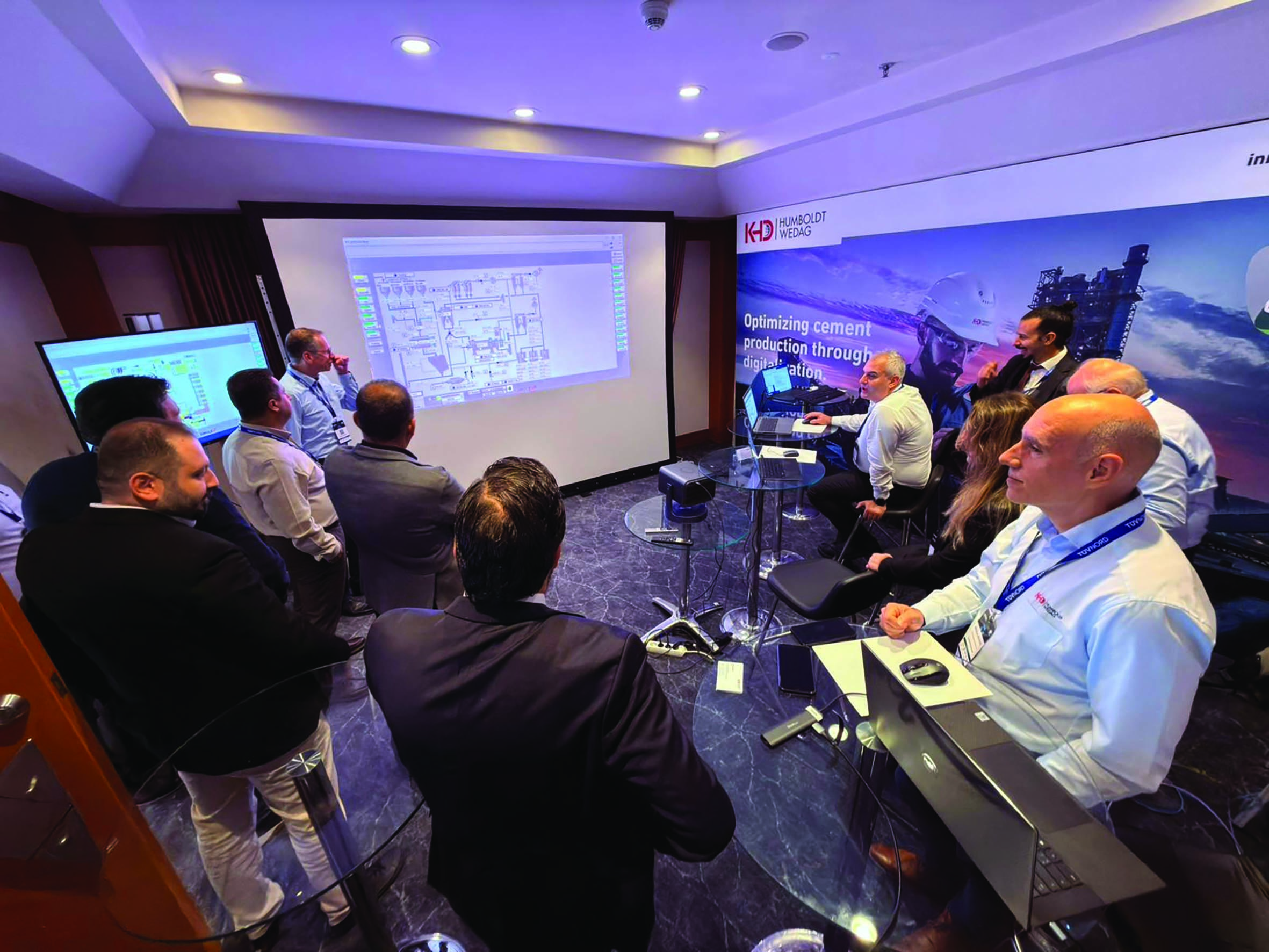
Throughout the event, experience rooms created by KHD Humboldt Wedag, Tonly, and MDJ were featured within the Digital Activity Zone. In addition, the Cement Olympics competition was organized in this zone with the support of KHD Humboldt Wedag. This Simulex-based competition ran throughout the event and attracted significant interest from participants.
 On the evening of November 6, the winners of the Cement Olympics were announced during the awards ceremony. Following the ceremony, participants enjoyed the event at the gala night, accompanied by music and dance.
On the final day of the event, Hakan Arden, Technical Director at DMT, delivered a comprehensive short course titled «Journey from Technical Studies to Financing for Mining and Cement Projects,» bringing CUSCIT’25 Cement Olympics to a successful close.
CUSCIT’25 Cement Olympics provided a unique platform over four days, bringing together industry leaders, academics, and technology providers to highlight knowledge sharing, innovative solutions, and sustainability-focused approaches. Throughout the event, participants had the opportunity to enhance their technical knowledge and experience, while also establishing international collaborations and networking opportunities. This meaningful gathering not only reinforced visions for the future of the cement industry but also left a lasting impression as an inspiring experience in the journey toward digitalization and sustainability-driven transformation.