Apart from the economics, I think that, from an environmental perspective, the emissions that cause global warming should be calculated in a comparable way through the carbon footprint and provided in the EIA report. Thus, it will be possible to evaluate the rising trends in terms of their environmental impact. The most important effect of these calculations will be the mandatory adoption of the measures to reduce energy use and emissions.
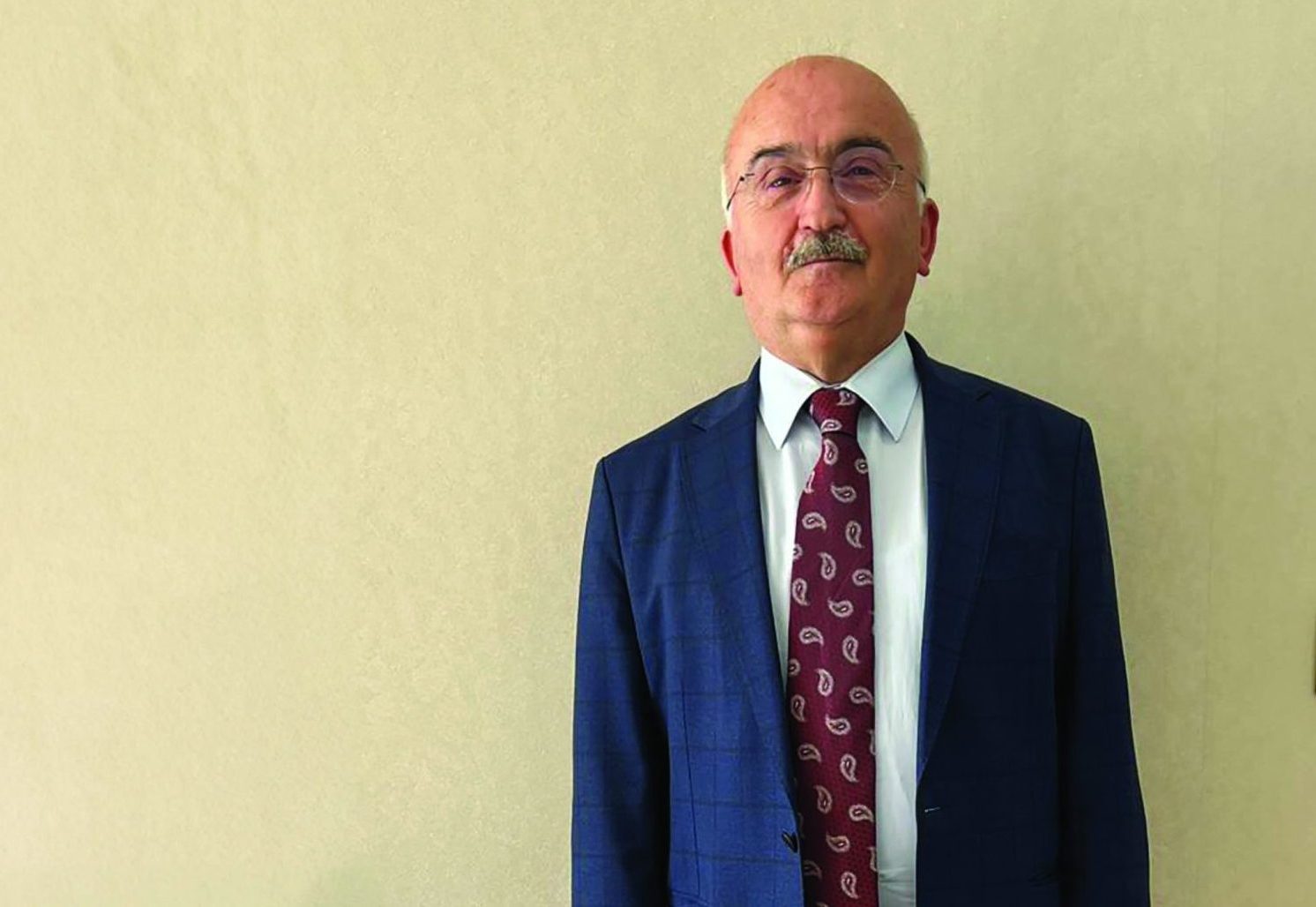
Mehmet Oğuz Güner
Former Head of EIA Department
According to the results of the EIA report, what are the most common problems encountered during the process of obtaining environmental permits for a project and what improvements would you suggest to solve these problems?
While approving an EIA Report, the location and technology alternatives of the investment are evaluated in terms of the legislation in force. For an investment, whose EIA Report found acceptable, no barrier exists in obtaining environmental permits. However, there may arise problems in terms of other permits (forest, pasture, opening a workplace, etc.). Solution to these problems requires all permit processes for investments to be carried out in an integrated manner. The process of obtaining approval for EIA Report include the approvals of all relevant public authorities and institutions. Since the EIA processes are based on measurement, analysis and evaluation in accordance with the scientific principles, the EIA decision should constitute the underlying document based on which all additional permits should be granted.
During the preparation of EIA report, how are the socioeconomic conditions of the project region and the potential role of these conditions on the environmental impacts of the project assessed?
Evaluation of EIA Reports considers the features such as population, fauna, flora, geological and hydrogeological features, natural disaster potential, soil, water, air, atmospheric conditions, climatic factors, ownership status, cultural heritage and site features, landscape features, land use mode, degree of sensitivity, historical sites and water table changes that will affect the protected areas, etc. of the project area and the environment likely to be affected by the proposed project. In addition, the concept of “social license” as defined internationally is also included in the EIA process. In this context, the project owners are requested to carry out a sociological situation assessment based on scientific data in the investment region, to link the sociological formation with the economic situation of the region, to determine the change in socio-economic conditions during and after the investment, and to include the necessary measures to be taken in the EIA report.
During the EIA process, how is the applicability and effectiveness of mitigation and adaptation strategies proposed to reduce the potential environmental impacts of the project assessed?
In terms of the mitigation of the potential effects of the projects, the legislative evaluation in the EIA process particularly focuses on adoption of the necessary measures, based on a technological research, taking account of the climate change, to reduce emissions, discharge and waste amounts as well as energy consumption. However, more effective methods should be developed in terms of global climate change and emissions. Investors are expected to reflect the economic change that may emerge due to carbon emission trading, which is planned to start in 2030, especially after the Paris Climate Agreement.
How is feedback from local communities and environmental protection groups taken into account during the followup of the EIA report and to what extent are this feedback effective on the implementation of the report?
The EIA procedure, which is based on the sustainability of the economic and social balance as well as environmental protection, is the most transparent process in which public opinions and suggestions are collected. From the beginning of the EIA process, complaints and suggestions of local communities and NGOs regarding the project are taken into consideration. During the process, a public consultation meeting (public participation meeting) is held and the EIA report is opened to public opinion and suggestions before it is finalized. The opinions and suggestions collected are evaluated within the framework of scientific norms and the investor is expected to follow and respond to these suggestions.
Are there differences in international practices in the EIA process? If so, according to you, what are their scopes and impacts? How do any variation in the legal basis of the EIA process affect the evaluation process and results of projects?
When we consider EIA practices in general, there is no difference in terms of purpose, given that the main objective is to protect the environment. Most of the existing differences are in terms of implementation according to the applicable legislation. The EIA regulation applied in our country has been harmonized during the EU harmonization process. This is also emphasized in EU progress reports. When we look at international EIA practices, EIA is not a permit but an opinion. In some countries, the EIA process is evaluated by local government and the EIA report is prepared by persons with individual competence. In Turkey, the EIA process is carried out centrally by the Ministry of Environment, Urbanization and Climate Change with the participation of all relevant public institutions.
The EIA procedure, which is based on the sustainability of the economic and social balance as well as environmental protection, is the most transparent process in which public opinions and suggestions are collected.
Although the words permit and opinion have different meanings when considered individually, we can emphasize the word “permit” used in EIA process of our country as meaning the “obtaining positive opinion”. When compared the EIA regulation and annexed lists of our country vis-a-vis those of EU countries, it is safe to say that our regulation is more attentive and has a more environmentalist character. In the EIA process, projects are subject to meticulous scrutiny within the framework the legislation of our country.
In our country, EIA decisions is actionable through the courts under the applicable laws. When these decisions are taken to the court, the process is concluded in a short time so that there remains no such process once investment starts. It is not possible to set a standard for the EIA process. Considering the type and location of the project, the EIA process should be carried out through a transparent public communication in a systematic manner, taking into account the balance of environment-economy-natural resources. To ensure a healthy EIA process, besides Ministry of Environment, Urbanization and Climate Change, the companies that prepare the EIA report and the public authorities that are a part of the Review and Evaluation Commission (REC) should contribute to the process.
Does an EIA certificate issued by the Ministry of Environment in Turkey have international validity? If not, what steps do you think should be taken to ensure equivalence?
In general, the EIA certificate issued by the Ministry of Environment, Urbanization and Climate Change is valid and is considered a prerequisite for financing applications. However, since international financial institutions regards the socio-economic dimension of the project as much important as the environmental impact, they also require detailed studies for obtaining a “social license”. Especially the World Bank expects more comprehensive studies on this issue. I do not think that the EIA certificate issued in our country is inadequate. However, I think that scientifically based studies on social impact assessment should be included in EIA formats.
Calculating and accounting recognition of carbon footprint seems to be a critical part of the EIA process in the future. Could you share your views on this subject?
With the Paris Climate Agreement, the carbon market was activated. Especially in the EU, carbon pricing is done in the stock exchange that has existed for a long time. However, it is known that carbon trade will also start in 2030 depending on this market. Considering today’s price index and carbon price forecasts for 2030, I think that carbon accounting can have serious impacts on project economics. Therefore, it is imperative to link the carbon footprint with the EIA process. Apart from the economics, I think that, from an environmental perspective, the emissions that cause global warming should be calculated in a comparable way through the carbon footprint and provided in the EIA report. Thus, it will be possible to evaluate the rising trends in terms of their environmental impact. The most important effect of these calculations will be the mandatory adoption of the measures to reduce energy use and emissions.
Financing of projects is an important aspect of the EIA process. Could you tell us about the role of EIA in accessing project financing?
Project financing is a crucial step for the implementation of projects. Since financial institutions consider the benefit of society well before the economic approach, they want to see the impacts of projects on the environment and socio-economic structure in detail. For this reason, an EIA certificate is a must for an investor who will apply for project financing. If an investor needs a loan from international credit institutions, besides EIA certificate issued by the Ministry of Environment, Urbanization and Climate Change, he will also be required to provide the studies such as social impact assessment and livelihoods, basin-based hydrogeological impact assessment, long-term biodiversity baseline studies, long-term background measurements.
During your service in the public sector, you have played an important role in Environmental Impact Assessment (EIA). Do you think there has been a change in the private sector’s approach to EIA processes from the past to today?
The EIA report is a summary of a process where investors commit to protect the environment and society during as well as after the investment process and open themselves to public scrutiny. Years ago, investors only saw this process as a permit procedure to be passed. However, with the increasing environmental awareness and the importance of a professional approach, the fact that the EIA report actually presents a business plan to be followed during the investment process has been understood by investors. In this way, the EIA process has been implemented in our country for approximately 30 years. The EIA certificate granted under the implementation regulation, which has taken its final and current form with progressive legislative amendments as made to eliminate the problems experienced in practice over the years, has become mandatory for the investor to obtain other permits. Forestry permits, pasture permits, workplace opening permits, environmental permits and incentives are not given without an EIA certificate. In this context, the private sector’s approach to the EIA process has become important for investments and it has been recognized that the process is indispensable.
We would like to get to know you closer, could you tell us about yourself?
In 1983, I completed my education in the Mining Engineering. Afterwards, I served as a raw Material Preparation Engineer at Etibank-Çinko Kurşun İşletmeleri A.Ş. (ÇİNKUR); Petroleum and Mining Branch Manager at the EIA General Directorate of the Ministry of Environment, Tekirdağ Provincial Environment Director, Head of EIA Department at the EIA General Directorate, Consultant at MİGEM of the Ministry of Energy and Natural Resources, and President of the Occupational Health and Safety Research and Development Institute of the Ministry of Labor and Social Security, in the specified order. I am currently serving as a consultant to share my knowledge with the sector.