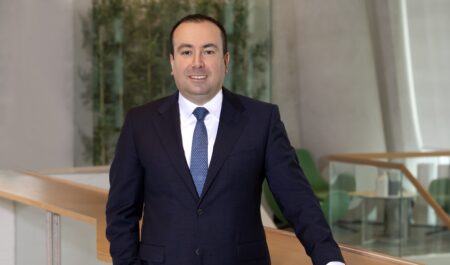
On the third anniversary of the 6 February earthquakes, Turkish Ready-Mixed Concrete Association (THBB) Chairman of the Board Yavuz Işık made the following remarks:
“While we continue to feel the pain of the lives we lost in the 6 February Kahramanmaraş earthquakes as deeply as on the first day, we act with full awareness of the responsibility this major disaster has placed upon us. Although earthquakes are a reality of our geography, destruction and loss of life are not destiny. The process we have experienced has clearly demonstrated that structural safety is a technical necessity that can only be ensured through engineering science and effective supervision mechanisms. A safe future can only be built on solid foundations where past mistakes are not repeated and where standard-compliant materials and sound engineering practices come together.”
Structural Safety Is Built on Standard-Compliant Ready-Mixed Concrete
Emphasizing that ready-mixed concrete, the most fundamental component of the construction sector, has today become the most reliable and rigorously inspected building material, Yavuz Işık stated: “Unlike the primitive production methods of the past, today’s modern ready-mixed concrete plants operate under a disciplined production process that is monitored through technological means from production to on-site placement and subjected to continuous laboratory testing. In particular, technical inspections carried out in the earthquake-affected regions have shown that 99% of buildings constructed within the scope of the Building Inspection System and using standard-compliant ready-mixed concrete remained standing. This data is the most concrete evidence that the right material and effective supervision save lives.”
Drawing attention to the importance of compliance with standards and supervision, Işık added: “The fact that the vast majority of collapsed buildings were structures built without engineering services, without supervision, and in accordance with pre-2000 standards clearly shows that the root cause of the problem lies in lack of supervision and non-standard practices.”
Structural Safety Is a Holistic Process
Stating that the Quality Assurance System (KGS), implemented for many years under the leadership of THBB, together with existing legal inspection mechanisms, guarantees concrete quality, Yavuz Işık said: “For a building to be truly resistant to earthquakes, not only the quality of the concrete but also the accuracy of the soil investigation, the engineering design of the project, the quality of the reinforcing steel, and the workmanship on site are of vital importance. Even if the highest standard of concrete is used, a project that is incompatible with ground conditions or faulty implementation can jeopardize structural safety.”
Noting that the high inspection standards achieved in the ready-mixed concrete sector should be extended to all stages of construction in line with the goal of building earthquake-resistant cities, Işık stated: “The same level of care shown in concrete production and sampling must be applied with equal rigor to every aspect, from rebar installation workmanship to concrete curing, from ground improvement works to structural design. Safe construction is a chain, and that chain is only as strong as its weakest link.”
Shared Responsibility for Earthquake-Resistant Cities
Yavuz Işık emphasized: “On the journey to building earthquake-resistant, safe, and livable cities, we are always ready to work shoulder to shoulder with public institutions, the private sector, and all segments of society, and to share our knowledge and experience. On this occasion, we once again commemorate with mercy those who lost their lives in the 6 February earthquakes and hope that the painful lessons of the past will shed light on building a safer Türkiye for the future.”
Academic Assessment on Ready-Mixed Concrete and Earthquake-Resistant Structures
Yavuz Işık also noted that on the first anniversary of the Kahramanmaraş earthquakes, THBB presented to the public an “Academic Assessment” in which opinions on concretes to be used in earthquake regions were shared, particularly outlining the minimum requirements necessary for newly constructed buildings to be resistant to potential earthquakes.
Commenting on the “Academic Assessment on Ready-Mixed Concrete and Earthquake-Resistant Structures,” prepared by faculty members who currently serve or have previously served at various universities and who are also members of the Scientific Committee of the THBB BETON 2023 Congress, Işık emphasized that for structures to be earthquake-resistant, they must be constructed by design, project and quality management, construction, and inspection teams composed of engineers and supporting professionals with sufficient experience and competence to ensure compliance with relevant standards and specifications in terms of functionality, serviceability, resistance to internal and external effects, and sustainability.