
KHD Humboldt Wedag
CTO

The cement industry is at a critical crossroads where the rapidly growing global demand for infrastructure intersects with the urgent need to reduce carbon emissions driven by the climate crisis. While the volume of infrastructure to be built worldwide over the coming decades is expected to far exceed today’s levels, demand for concrete and cement is set to rise accordingly. At the same time, the inherent characteristics of cement production—marked by high energy consumption and process-related CO2 emissions—place the sector at the very center of the global decarbonization agenda.
With its Cement Beyond Carbon vision, KHD presents a holistic transformation perspective that goes beyond isolated technological solutions. This approach encompasses a multi-layered roadmap ranging from reducing the clinker factor and increasing the use of alternative fuels, to advanced process optimization and the integration of carbon capture technologies. KHD’s perspective underscores that the future of cement cannot be achieved through “less carbon” alone but requires a production paradigm that moves decisively beyond carbon.
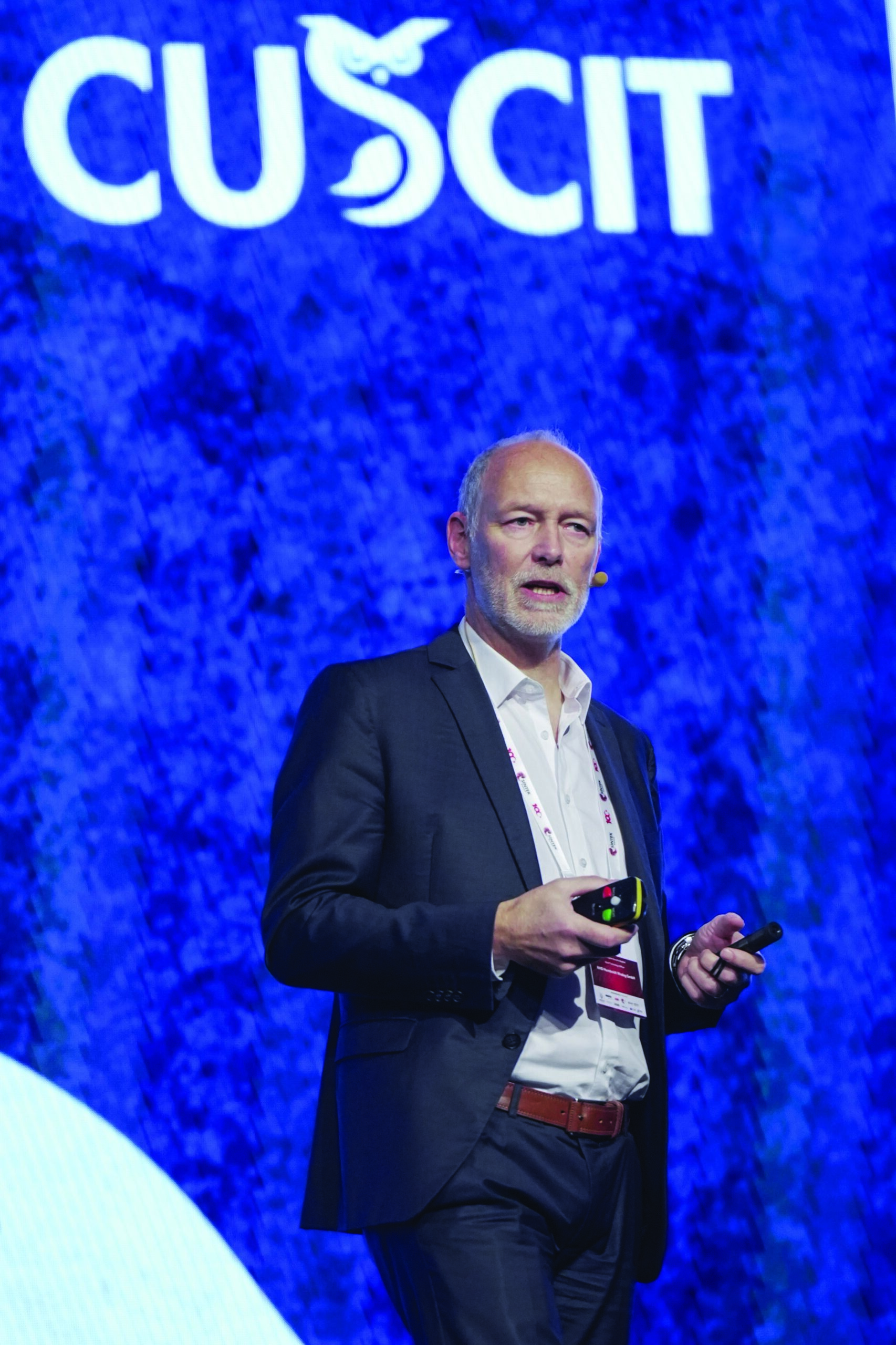
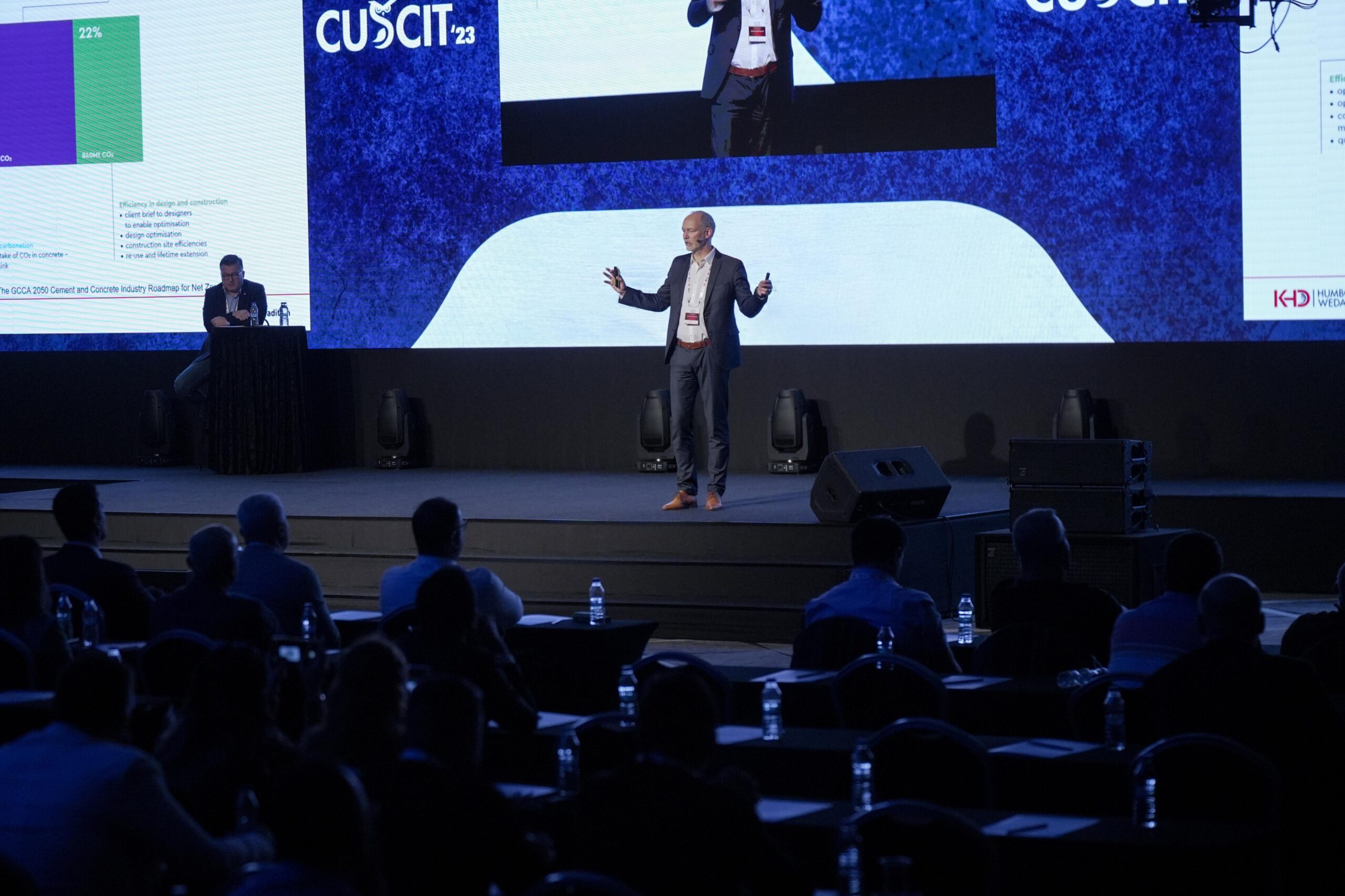
Your keynote at CUSCIT’25 begins by citing a statement by UN Secretary-General António Guterres: that three-quarters of the infrastructure that will exist in 2050 does not exist today. What does this mean for cement demand?
It is a staggering figure when you break it down. According to research published in Nature, the world had about 550 gigatons of concrete installed by 2020. Following Guterres’s projection, we would need an additional 1,650 gigatons over the next 25 years: that is 65 gigatons annually, more than double current production levels. Meanwhile, the Global Cement and Concrete Association projects a 143% increase in concrete growth by 2050 under current practices.
Now, we must admit that there are uncertainties in these projections. For example, the UN’s assumptions depend on societal development trajectories that may not fully materialize. However, what is virtually guaranteed is high demand for concrete infrastructure. Climate change alone is likely to drive massive consumption. Consider the coastal megacities—Istanbul included—that will require extensive sea defenses, dikes, and protective infrastructure as sea levels rise.
This creates a challenge because we cannot continue to emit carbon at the current rate. So, we must decouple concrete production from clinker consumption and carbon emissions.
One of the key messages of your keynote was the need to act quickly to abate cement’s carbon emissions. Why is rapid decarbonization so critical?
Because we’re running out of time. Let me give you two examples. The European Environment Agency recently published findings showing that decarbonization efforts across Europe are proceeding far too slowly to meet the requirements of the Paris Agreement. Even more striking, the German Advisory Council on the Environment calculated that Germany’s remaining CO2 budget—the amount the country can still emit while staying consistent with Paris goals—will be exhausted by 2033. That is only eight years away. After that, Germany would need to be completely carbon neutral. While cement production accounts for about 2% of Germany’s emissions, this timeline shows that heavy industries are far behind their necessary decarbonization trajectories, and this is the case worldwide.
This brings us to KHD’s “Cement Beyond Carbon” strategy. Can you explain this vision and how it positions KHD as a partner for decarbonization?
“Cement Beyond Carbon” represents both a statement of possibility—that the cement industry can be decarbonized—and a comprehensive roadmap for achieving it. It comprises two phases.
The first phase focuses on drastically reducing emissions through proven and emerging technologies available today. This includes several key levers: dramatically reducing clinker content in cement through calcined clay, achieving very high thermal substitution rates with alternative fuels, and optimizing plant operations through advanced control systems.
The second phase, which becomes critical after 2030, addresses unavoidable emissions from limestone calcination through carbon capture technologies. Even with maximum efficiency improvements, some CO2 emissions are chemically inherent to cement production. When we reach the limits of what efficiency can achieve, carbon capture becomes mandatory for carbon neutrality. There is simply no way around it.
“Cement Beyond Carbon” represents both a statement of possibility—that the cement industry can be decarbonized—and a comprehensive roadmap for achieving it.
Let’s talk specifically about calcined clay. The availability of suitable clay is often cited as a challenge. How does KHD address this?
Many producers search exclusively for kaolinite because it is considered the highest quality and easiest to calcine. But this limits options unnecessarily. At KHD, we have developed a highly efficient flash calcination technology designed to process various clay types—including illitic, montmorillonitic, and chloritic clays—into high-quality supplementary cementitious materials.
The key lies in precisely adjusting two critical parameters, retention time and temperature, to each clay type. In our flash calciner, very finely ground clay powder flows evenly through the system. This ensures controlled retention time and uniform temperature exposure for all particles. This precision prevents both recrystallization from excessive temperature and agglomeration from excessive retention time, resulting in optimal product quality with minimal carbon footprint. Calcined clay can replace up to 50% of clinker in cement without compromising strength, and with our technology, producers have access to far more clay deposits than previously thought feasible.
Another significant component of your strategy is alternative fuels. The KHD Pyrorotor® technology is your most advanced solution in this area. Can you explain what makes this technology distinctive?
The Pyrorotor is a rotating gasification reactor that represents a breakthrough in the utilization of alternative fuels. The cement industry has pursued fossil fuel substitution for decades, but the challenge has always been handling low-quality, difficult-to-burn fuels economically. The Pyrorotor can substitute up to 95% of fossil fuels and handle materials that are hard to burn, require longer retention times, or have high moisture content, without the need for expensive pre-processing. This is the critical differentiator. It allows cement producers to use low-cost, minimally processed waste and biomass fuels that would otherwise be unsuitable. And, thanks to its staged combustion principles, it simultaneously reduces NOX emissions.
The Pyrorotor is available as a modular add-on to any existing calciner. We now have 15 installations operating worldwide with excellent client feedback. Operators are successfully using low-cost alternative fuels to fire their kilns, dramatically reducing both fuel costs and carbon footprints.
KHD has recently secured Pyrorotor® contracts in the Turkish market. Can you tell us about these projects?
Our first Turkish Pyrorotor® contract was with KÇS Kipaş Çimento for the Kahramanmaraş plant. This installation enables Kahramanmaraş to continuously achieve thermal substitution rates above 90% in the calciner while keeping NOX emissions below 800mg NO2/Nm³. The project required minimal production interruption—just a brief stoppage for gas duct connections before commissioning. This marked our 11th Pyrorotor® unit contracted worldwide.
In addition, at the end of 2025, we signed an order for a second Pyrorotor® installation at a Turkish cement plant, bringing the total number sold worldwide to 21.
The Pyrorotor can substitute up to 95% of fossil fuels and handle materials that are hard to burn, require longer retention times, or have high moisture content, without the need for expensive pre-processing.

Beyond alternative fuels and supplementary cementitious materials, what other technologies are essential for decarbonization?
Plant optimization and advanced control systems play a crucial role. Our latest innovation is the KHD ProMax® RTO advanced control system. This software optimizes cement and clinker production in real time by combining artificial intelligence with human experience. It utilizes multiple neural networks, trained online on actual plant operations and augmented by human expert knowledge, to achieve permanent self-learning and optimized operations. The efficiency gains translate directly into reduced energy consumption and lower emissions.
Despite advances in AI, however, we continue to believe that operator training is critical. Knowledgeable and experienced operators can identify and resolve inefficiencies that automated systems might miss. We have recently enhanced our tried-and-tested Simulex® training simulator with virtual reality capabilities, allowing trainees to walk through the plant virtually, identify problems, and learn to intervene effectively.
Looking ahead, what does KHD’s Cement Beyond Carbon vision mean for Turkish cement producers?
Cement Beyond Carbon represents a comprehensive partnership opportunity. Türkiye has long had a strong, competitive cement industry, but it faces the same decarbonization imperatives as producers globally. We offer a comprehensive technology portfolio that addresses every aspect of the challenge. This includes not only the proven technologies we have already mentioned, but expertise in integrating future carbon capture technologies when needed.
At KHD, we have developed a highly efficient flash calcination technology designed to process various clay types—including illitic, montmorillonitic, and chloritic clays—into high-quality supplementary cementitious materials.
You mentioned carbon capture, which is included in the second phase of the Cement Beyond Carbon vision after 2030. Some consider this too expensive. How do you respond to that concern?
Many in the industry indeed consider carbon capture too expensive today. However, this perspective overlooks a critical point: once the industry reaches the limits of efficiency improvements and material substitution, carbon capture becomes the only pathway to carbon neutrality. The question is thus not whether it is expensive relative to current costs, but whether it is necessary relative to survival.
With 197 countries committed to the Paris Agreement and the physical reality of climate change becoming increasingly undeniable, we believe that carbon capture will transition from optional to mandatory. Various capture technologies are available or under development. KHD’s core competency lies in engineering cement plants that optimally incorporate these technologies with the highest possible process efficiency, regardless of which specific technology proves most practical and economical. We are preparing our clients for this inevitability.
Our latest innovation is the KHD ProMax® RTO advanced control system. This software optimizes cement and clinker production in real time by combining artificial intelligence with human experience.
To close, what’s your message to the cement industry here in Türkiye?
Let us believe cement has a future, but it needs to be decarbonized, and quickly. Cement and concrete remain indispensable materials for building the infrastructure and buildings that societies need. In fact, there is no prosperous future without cement and concrete; however, the way we produce cement must change.
The good news is that the technologies exist, and the pathway is defined. The bad news is that the window of action is rapidly closing. At KHD, we have encapsulated this conviction in our Cement Beyond Carbon vision. The journey to carbon-neutral cement production has begun, and we are committed to ensuring that every producer has access to the proven technologies and expertise needed to succeed.