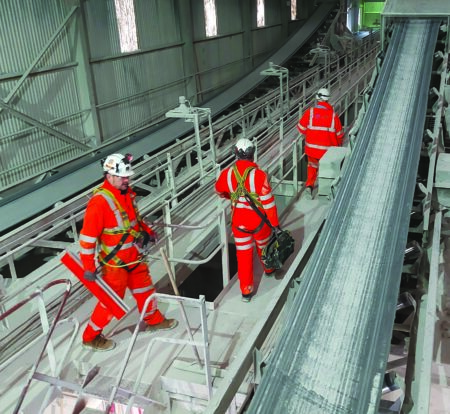
Aggregate mostly reinforced concrete structures, highway, railway, etc. It is a type of product used in certain size ranges according to the places of use in areas. It is obtained in various ways; quarries, sieving from various sources, recycling are the main ones .
One of the indispensable products of the construction industry is aggregate. Along with the use of concrete, road and construction in terms of raw materials, there are also disadvantages such as faster consumption of natural resources as well as the need for serious energy and labor.
Today, with the increase in environmental awareness, recycled aggregates appear as an important waste management strategy. Recovered is very important in terms of protecting natural resources, saving energy and reducing environmental pollution. In this context, “recovered aggregates” play an important role. Recycling aggregates play an important role as environmentally friendly and sustainable building materials. As part of waste management strategies, the use of these aggregates brings with it various environmental benefits such as conserving natural resources, saving energy and reducing the problem of landfilling. For this reason, it is important for both individuals and industries to encourage recycling and to actively use the aggregates obtained in recycling in order to create a cleaner and more livable environment for future generations.
Recycled aggregate; It is the aggregate obtained as a result of processing inorganic materials that have been used in structures before. Aggregates formed by breaking only recycled concrete are defined as Recycled Aggregate (GDA), and the wastes formed by the mixture obtained from concrete, plaster, screed, ceramic, tile, glass, paint, marble and brick resulting from construction rubble wastes are defined as Construction Rubble Aggregate (IMA). It is recommended that the materials to be recycled be separated from GDA concrete structures instead of IMA, which contains more concentrated inorganic substances.
Recycling aggregates offera number of benefits as an environmentally friendly building material option:
The use of recycling aggregates reduces the consumption of limited natural resources such as natural sand, gravel and stone. This reduces the negative effects on natural ecosystems and habitats.
- The amount of energy required to produce new building materials is significantly reduced by using recycled This helps to reduce the carbon footprint on the environment.
- Recycling of waste materials indirectly reduces the need for landfills and offers an alternative solution to the landfill problem.
- Recycling ensures that wastes are brought into the economy. Aggregates obtained by recycling waste create an economical and sustainable source of building materials for the construction industry and other industries.
Considering all its effects, as a disadvantage, it is observed that as the amount of recycled aggregate used in ready-mixed concrete increases, it reduces the quality of the concrete and increases the deformation. Considering that our country is an earthquake zone region , it seems more appropriate to use it as a filling material for highways or construction areas rather than ready mixed concrete.
Construction Materials Regulation (305/2011/ EU) ANNEX.1 Article 7, the issues mentioned in relation to the sustainable use of natural resources are as follows;
- Materials and parts of construction works must be reusable or recyclable after demolition.
- Construction works must be durable.
- Environmentally compatible raw materials and secondary materials should be used in construction works.
The regulations and standards governing the recycling aggregates can be evaluated in line with the normal crushed stone aggregates according to their usage areas. In this direction, CE marking and certification is obligatory according to the product standards from the bodies approved by the European Commission and the confirmation system determined by the regulation for the product to be placed on the market.
Our organization has been authorized by the European Commission with the ID number 2404. In this context, it has the authority to certify within the scope of the standards to which recycling aggregates are subject.