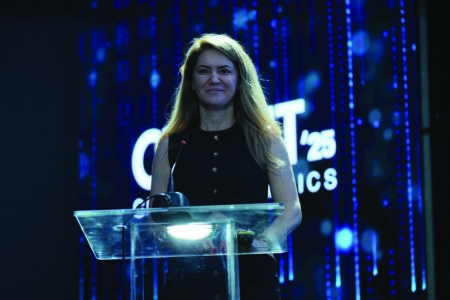
Kağan Ersoy / Ecosys Sustainability Services Consulting Ltd. Co.
Sustainability is a concept created by economists with the industrial revolution and found a place in daily life in the 1980s. Sustainability is the current name of the cycle in systems. Its conceptual development and shaping have been especially in the last 30 years. In today’s world, it has ceased to be conceptual and has a philosophical equivalent. With its sociological aspect, it has entered the vital perception of societies. In today’s world perception, every subject is evaluated with a circular perspective. Sustainability is experiencing its own philosophical, sociological and application evolution.
Businesses have actually made sustainability the main goal of their lives on the day they were founded. Sustainability is the transfer and survival of companies and businesses to future generations. With the ecological calculations of scientists for the future of humanity, it has caused different perceptions in society and increased the importance of ecological values.
Intellectual and operational associations have started for the future of humanity, which first started individually and then within the framework of non-governmental organizations. Today, social demands have enabled the legal framework of sustainability to be shaped by governments and translated into legal practices. Thus, values based on the environment have been combined under the concept of sustainability. Legal obligations have brought businesses and companies into the sustainability process. Environmental pressures pose a threat to the brand values of companies.
The main problem encountered in every company that starts sustainability studies is the lack of situation assessment. They see the subject as a compulsory work. Especially starting with the perception and fear of carbon emission tax at the border causes a chain of mistakes.
The speed of domestic and international legal developments on applications cannot be answered with practical solutions. For the ones starting the process late, things have become increasingly complex. This causes error-based decisions to be made.
Sustainability has its own cost, of course. Companies should perceive the systematics of the business. They should plan the cycle process correctly. Every arrangement and investment bring cost. Accordingly, companies will need resources in the short, medium and long term.
Sustainability basically starts with internal improvement. It continues with efficiency-based, process improvements and optimization. Optimization is the basis of creating financial resources. Efficiency provides it. Efficiency brings access to finance.
The perception that sustainability necessarily requires finance and that this can be achieved through external resources is not correct. Sustainability has the ability to create its own financial resources. This view and perception have not yet been formed in our country.
The target should be defined correctly in companies and enterprises, and the will to reach the target should be created in the management. It is essential to be ambitious and take decisions. It is necessary to hold on to the target.
The process must be planned correctly and divided into manageable and applicable parts. After planning, the investment to be made at each stage and its return ratios should be calculated. According to the data to be obtained, verifications and arrangements of the plan should be made. Short-, medium- and long-term process targets should be clarified.
It should not be forgotten that sustainability creates its own internal financial resources. First of all, it should be planned for sustainability to create its own resources. In the second stage, external resource needs and costs should be calculated. It is right to head to external resources accordingly.
Equity Resources: The company should go beyond classical financial analyses and evaluations. Management should not resist the change in the system of thought. It should accept improvement thinking and actions. Management must give up self-centered mentality. They should demand objective external audits and reports. It should be ensured that units carry out efficiency analyses within themselves. Support should be given for studies that will increase their own productivity and the chance of implementation should be created. Success must be supported. There are dozens of systematics and practices for this stage. It came to life with the World War II under various names. From the moment the will of companies and enterprises starts, profit maximization brought by efficiency will be achieved.
The surplus values obtained must be protected with the right financial management. Productivity is always a surplus resource and should be invested in the company.
External Resources: The goal of reaching sustainability targets quickly creates the need for external resources. The cost and planning of this requires a separate optimization calculation. Accurate process management must be done. Today, many resources are available both in Turkiye and abroad. Production optimization investments are the most supported by outsourcing. The surplus values obtained as a result of efficiency are also a guarantee for the return of financing. For example, the perspective of external sources is always positive for an investment that will reduce their own energy costs. Recycling of process waste has the same value. Every investment that reduces production costs is a positive valuation for external sources. Managerial improvements also find value in this context. Every mechanization investment that reduces unit costs is a demand that is secured in itself. The main thing here is to think in such a way that the demand creates its own collateral. Companies should make their planning and valuations on this axis. Financing sources are based on your perspective on the subject.
Businesses and companies often do not know that many of the retrospective studies they have done are actually their own plus- value components in the subject. Or they do not look from that point of view. They do not know their existing surplus values.
External resources include various derivatives. It is necessary to investigate the legal provisions before starting the investment. This scope is also supported by the state. Although they are not direct financial support, the fact that they are based on offsetting creates serious value. They also serve as collateral. It is necessary to find out which investment supports be benefited from and be used. There are various types and applications in this section. Financing providers base their demands on cyclical targets and what has been done. Transparency and accountability are also among the most important criteria.
Sustainability is “Multidisciplinary Process Management”. It is necessary to put every stone in the right place in its components. As long as the transmission of demand to domestic and foreign financial providers is within this perception, all kinds of financial demands are met.
Financial support is provided in different derivatives from foreign external sources. There are much more advantageous financial derivatives than thought. The companies that have done the right work in our country have accessed foreign financing with special opportunities in the last 10 years. There are good success stories. And the relations are still continuing.
In the end, Sustainability is multidisciplinary process management. Management determination and will are required. The habits and single perspective of the management must be left behind. Optimization of the process is essential. Equity capital, which is the cheapest financial source, is created with the right planning and time program. If there is a need to accelerate the process, it is possible to bring forward the parts of the project that have their own collateral with the right planning. Projects and optimizations should be made in line with the expectations of domestic and foreign financiers. Exporters also have various advantages in this regard. Perception and perspective will lead the companies to the desired results.